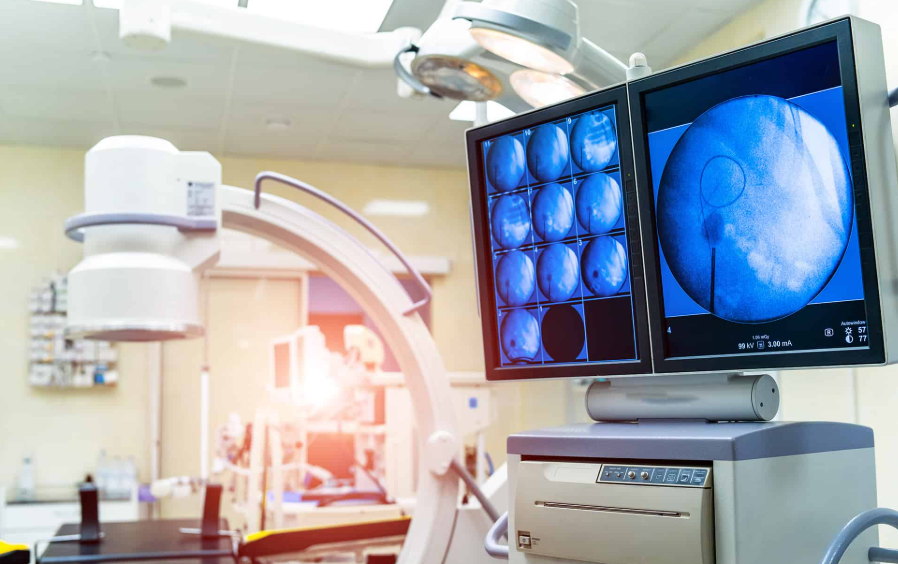
X-ray imaging systems depend on precise voltage control, efficient power delivery, and reliable source performance to produce consistent results. Whether used in industrial inspection, scientific research, security screening, or analytical applications, every imaging platform requires components that can operate accurately while supporting long-term operational stability.
Equipment manufacturers are increasingly focused on reducing system complexity without compromising imaging quality. As compact designs become more important across multiple industries, many OEM developers are adopting the integrated X-Ray generator approach to simplify installation, improve reliability, and support space-efficient equipment architectures.
What Is an Integrated X-Ray Generator and How Does It Work?
An integrated X-ray system combines the X-ray tube, high-voltage electronics, control components, and supporting technologies within a unified assembly. Instead of relying on multiple external modules connected through extensive wiring, the integrated approach places critical functions into a compact package designed for streamlined operation.
This configuration helps reduce installation complexity while improving system organization. By minimizing external connections and consolidating key technologies, manufacturers can create imaging platforms that are easier to deploy, maintain, and integrate into OEM equipment.
Why OEM Manufacturers Prefer Integrated Designs
OEM developers often work within strict space limitations while balancing performance, thermal management, and operational reliability. Integrated solutions help address these challenges by reducing the number of standalone components required within an imaging platform.
Simplified architecture allows engineers to focus on overall system performance rather than managing numerous external assemblies. The result is a cleaner design that supports faster development cycles and improved installation efficiency.
See also: Franchise Growth Trends in Australia: Opportunities
Reduced Cabling Requirements
Traditional imaging systems frequently require multiple interconnections between generators, tubes, and control electronics. Integrated assemblies reduce wiring complexity and contribute to a more organized system layout.
Easier Equipment Integration
Compact construction simplifies installation within industrial and analytical equipment. This advantage is particularly valuable for OEM manufacturers developing customized imaging solutions.
Lower Maintenance Demands
Fewer external components often mean fewer potential failure points. This contributes to improved operational uptime and supports long-term reliability objectives.
Improved System Packaging
Consolidating critical technologies into a unified structure helps reduce overall equipment footprint. Smaller system dimensions create greater flexibility during product development.
The Importance of High-Voltage Generation
Stable high-voltage performance remains one of the most important aspects of any X-ray imaging platform. Consistent voltage delivery enables the X-ray tube to operate within precise parameters, supporting repeatable imaging performance across varying operating conditions.
Advanced generator technology helps maintain output stability while minimizing fluctuations that could affect image quality. Reliable electrical control contributes to accurate inspections and dependable system operation during extended use.
Voltage Stability and Image Quality
Consistent voltage regulation supports uniform radiation output. This stability helps imaging systems produce clearer and more repeatable inspection results.
High-Frequency Power Technology
Modern generator designs often utilize high-frequency switching technology. This approach improves efficiency while supporting compact equipment architecture.
Digital Control Capabilities
Integrated control systems allow operators to monitor performance and adjust operating parameters with precision. These capabilities support automated imaging environments.
Operational Consistency
Reliable power delivery contributes to predictable system behavior. Consistent operation remains essential in applications that require repeatable imaging performance.
Compact Design Advantages in Modern Imaging Equipment
Space efficiency has become increasingly important as inspection systems continue to evolve. Portable devices, laboratory instruments, and automated inspection platforms all benefit from technologies that reduce physical footprint without sacrificing functionality.
Integrated assemblies help manufacturers maximize available space while maintaining the performance characteristics required for demanding applications. Compact designs can also simplify transportation, installation, and overall equipment management.
Smaller system architecture often enables greater flexibility during product development. Engineers can optimize equipment layouts more effectively when critical components occupy less space.
Applications Across Industrial and Analytical Environments
Advanced imaging systems support a wide range of industries where precision inspection is essential. Different applications require varying levels of penetration capability, imaging accuracy, and operational endurance.
Industrial manufacturers frequently rely on X-ray technology for non-destructive testing and quality assurance. Analytical laboratories utilize imaging systems to examine materials and components without altering their structure.
Common application areas include:
- Non-destructive testing
- Electronics inspection
- Scientific research
- Security screening
- Manufacturing quality control
- Materials analysis
- Laboratory instrumentation
Thermal Management and System Reliability
Heat generation is an unavoidable aspect of X-ray operation. Without effective thermal management, elevated temperatures can impact performance, shorten component lifespan, and reduce overall system reliability.
Integrated systems often incorporate thermal design strategies that help regulate operating temperatures during continuous use. Proper heat dissipation supports stable performance while protecting sensitive electronic components.
Reliable temperature control contributes directly to operational consistency. Maintaining appropriate thermal conditions allows imaging equipment to perform effectively throughout extended inspection cycles.
Customization for Specialized OEM Requirements
No two imaging applications are identical. Some systems require compact footprints, while others prioritize higher penetration capability or specialized operating parameters. Customization helps manufacturers address these unique requirements more effectively.
Flexible engineering approaches allow imaging technologies to integrate smoothly into diverse equipment platforms. Tailored solutions can support application-specific objectives while improving compatibility with existing system architectures.
Customization also enables organizations to prepare for future operational demands. Scalable designs help accommodate evolving requirements without requiring significant redesign efforts.
Future Trends in Integrated X-Ray Technology
Imaging technology continues to advance through improvements in power electronics, control systems, and compact engineering techniques. These developments are enabling increasingly capable imaging platforms that occupy less space while delivering greater performance.
Enhanced monitoring capabilities, improved efficiency, and refined integration strategies are expected to influence future system designs. Manufacturers are continually seeking ways to increase reliability while simplifying implementation within OEM equipment.
As industries place greater emphasis on automation and precision inspection, integrated imaging solutions are expected to play an even larger role in next-generation equipment development.
Final Thoughts
What makes an imaging platform capable of delivering reliable performance year after year? The answer often lies in thoughtful integration, stable power delivery, and engineering expertise. VJ X-Ray develops integrated X-ray sources, high-voltage generators, monoblock solutions, and OEM-focused technologies designed for industrial, analytical, scientific, and security applications. Organizations evaluating an advanced X-Ray machine generator solution often look for compact architecture, dependable operation, and flexible integration capabilities that can support evolving imaging requirements.


