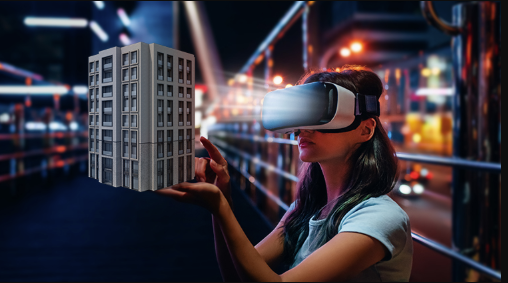
Virtual Reality (VR) is reshaping the landscape of architecture and design. By providing immersive experiences, it enhances client engagement and understanding. Real-time feedback allows for rapid design iterations, ensuring alignment with client objectives. As VR technology advances, its potential to innovate sustainable practices and address complex design challenges becomes increasingly evident. This evolution raises critical questions about the future of architectural practices and the role of technology in creative processes.
The Evolution of Virtual Reality in Architecture
The evolution of virtual reality (VR) in architecture has fundamentally transformed the design and visualization processes within the field.
Historical milestones, such as the introduction of CAD systems and early immersive technologies, paved the way for recent technological advancements.
These innovations empower architects to explore spatial configurations and materiality with unprecedented freedom, fostering a more dynamic relationship between design intent and client perception in architectural practice.
Enhancing Client Engagement Through Immersive Experiences
Immersive experiences provided by virtual reality (VR) significantly enhance client engagement in architectural projects.
Through immersive walkthroughs, clients can interact with designs in a dynamic manner, fostering deeper understanding and emotional connection.
This innovative technology transforms traditional client interaction, allowing stakeholders to visualize concepts in real-time, thus empowering them to express preferences and feedback, ultimately leading to more tailored architectural solutions.
Streamlining the Design Process With Real-Time Feedback
Streamlining the design process through real-time feedback enables architects to make swift, informed decisions that enhance project efficiency.
This approach facilitates real-time collaboration among stakeholders, allowing for immediate input and rapid design iteration.
As architects navigate complex design challenges, the ability to visualize changes instantaneously fosters innovation, empowering them to explore creative solutions while maintaining alignment with client objectives and project timelines.
See also: reibootpro
The Future of VR in Architectural Design and Planning
Advancements in virtual reality are set to revolutionize architectural design and planning, pushing the boundaries of how spaces are conceived and experienced.
Future applications will enhance sustainable design, enabling architects to visualize eco-friendly materials and layouts effectively.
Virtual walkthroughs will facilitate immersive client interactions, allowing stakeholders to explore designs interactively, ensuring that aesthetic and functional aspirations align before construction begins.
Ultimately, this will foster innovative architectural solutions.
Conclusion
As VR technology continues to evolve, its integration into architecture and design presents a serendipitous convergence of creativity and precision. Architects can leverage immersive experiences to foster client engagement while streamlining the design process through real-time feedback. This unexpected synergy not only enhances collaboration but also paves the way for innovative sustainable practices. Ultimately, the coincidence of advanced VR capabilities and architectural ingenuity promises a transformative future, reshaping how spaces are conceived, experienced, and realized.


