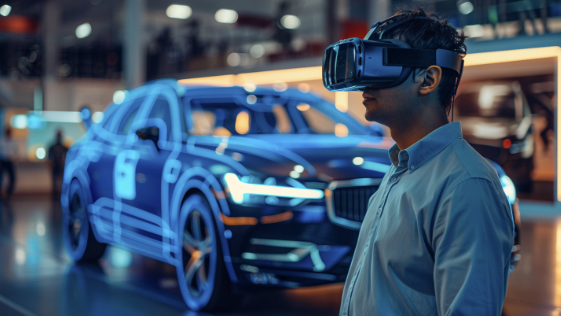
Virtual Reality is reshaping the business and marketing landscape. Companies are increasingly adopting VR to craft immersive experiences that resonate with consumers. This shift offers opportunities for enhanced engagement and emotional connection. Notable applications reveal how VR can streamline operations and drive innovation. As personalization trends merge with this technology, businesses face new challenges and possibilities. What implications does this have for traditional marketing strategies and customer loyalty?
The Rise of Virtual Reality in Marketing
In recent years, the integration of virtual reality (VR) into marketing strategies has emerged as a transformative trend.
Brands increasingly leverage VR to create immersive virtual tours and branded experiences, effectively engaging consumers in novel ways.
This innovative approach not only enhances product visibility but also fosters emotional connections, allowing brands to break free from traditional marketing constraints and redefine consumer interaction.
Enhancing Customer Engagement Through Immersive Experiences
While traditional marketing methods often struggle to capture consumer attention in an oversaturated market, immersive experiences through virtual reality present a compelling solution.
Case Studies: Successful VR Implementations in Business
Immersive experiences have not only revolutionized customer engagement but have also paved the way for innovative business practices.
Companies like Walmart utilize VR training for employee onboarding, enhancing retention and efficiency.
Similarly, automotive firms employ VR simulations for design testing, significantly reducing prototyping costs.
These case studies exemplify how VR can streamline operations and elevate workforce capabilities in diverse industries, fostering a culture of innovation.
See also: VR in Architecture and Design
Future Trends: The Evolving Role of VR in Marketing Strategies
How will the integration of virtual reality reshape marketing strategies in the coming years?
The convergence of VR and personalization trends will redefine consumer behavior, enabling brands to create immersive experiences tailored to individual preferences.
As businesses leverage VR technology, they will foster deeper emotional connections, enhancing engagement and loyalty.
This evolution promises to transform traditional marketing frameworks, paving the way for innovative strategies.
Conclusion
As businesses increasingly integrate Virtual Reality into their marketing strategies, some may question its effectiveness compared to traditional methods. However, the immersive nature of VR fosters deeper emotional connections, enhancing customer loyalty and engagement in ways conventional marketing cannot achieve. By embracing this innovative technology, brands can not only stand out in a crowded marketplace but also adapt to evolving consumer expectations, ensuring sustained relevance and growth in an ever-changing business landscape.


