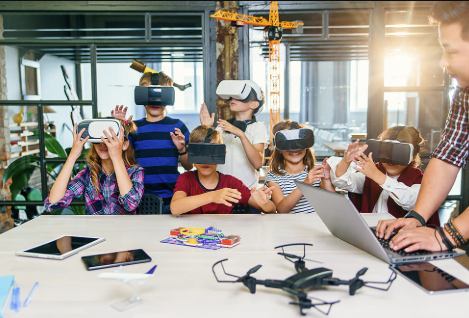
Virtual Reality (VR) is reshaping education by offering immersive experiences that deepen understanding and engagement. It allows students to explore intricate subjects and conduct experiments virtually. However, integrating VR into classrooms presents challenges, including costs and the need for teacher training. As educational institutions navigate these hurdles, the potential for VR to transform learning experiences raises important questions about its future role in academic environments. What innovations might emerge next?
The Benefits of Virtual Reality in Learning
As educators seek innovative ways to enhance student engagement, virtual reality (VR) emerges as a transformative tool in learning.
Innovative Applications of VR in the Classroom
Innovative applications of virtual reality in the classroom are reshaping the educational landscape.
Educators utilize immersive experiences to engage students in subjects like history and science, allowing them to explore ancient civilizations or conduct virtual experiments.
Interactive simulations foster critical thinking and collaboration, providing learners with hands-on opportunities that traditional methods cannot offer, ultimately enhancing understanding and retention of complex concepts.
Challenges of Integrating VR Into Education
While the potential of virtual reality (VR) in education is significant, several challenges hinder its widespread integration into classrooms.
Cost barriers present a major obstacle, as schools often struggle to afford the necessary technology.
Additionally, insufficient teacher training limits educators’ ability to effectively implement VR experiences.
Overcoming these challenges is essential for harnessing VR’s transformative power in the educational landscape.
See also: VR in Business and Marketing
Future Prospects for VR in Educational Settings
How might the future of education transform with the integration of virtual reality (VR) technologies?
VR promises to create immersive experiences that engage students like never before.
By facilitating personalized learning paths, educators can cater to diverse learning styles and abilities.
As VR technology becomes more accessible, it could revolutionize classrooms, making education more interactive, adaptable, and freeing for learners worldwide.
Conclusion
In conclusion, the integration of Virtual Reality in education holds transformative potential, enhancing student engagement and understanding through immersive learning experiences. For instance, a case study at a high school in California demonstrated that students using VR for biology lessons significantly improved their grasp of complex concepts like human anatomy, leading to higher test scores and increased interest in the subject. As educators navigate challenges, the future of VR in classrooms promises to revolutionize personalized learning and collaboration among students.


